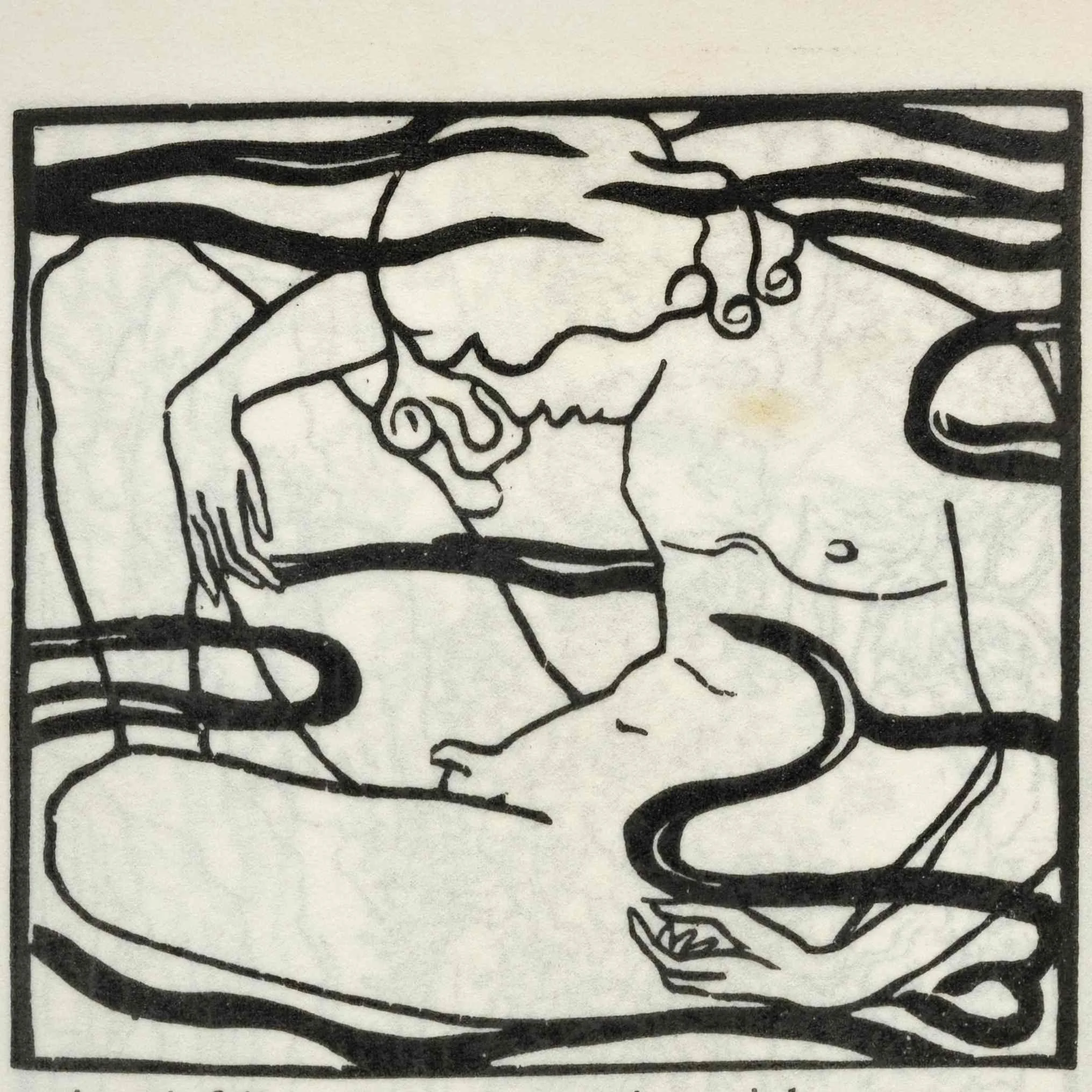
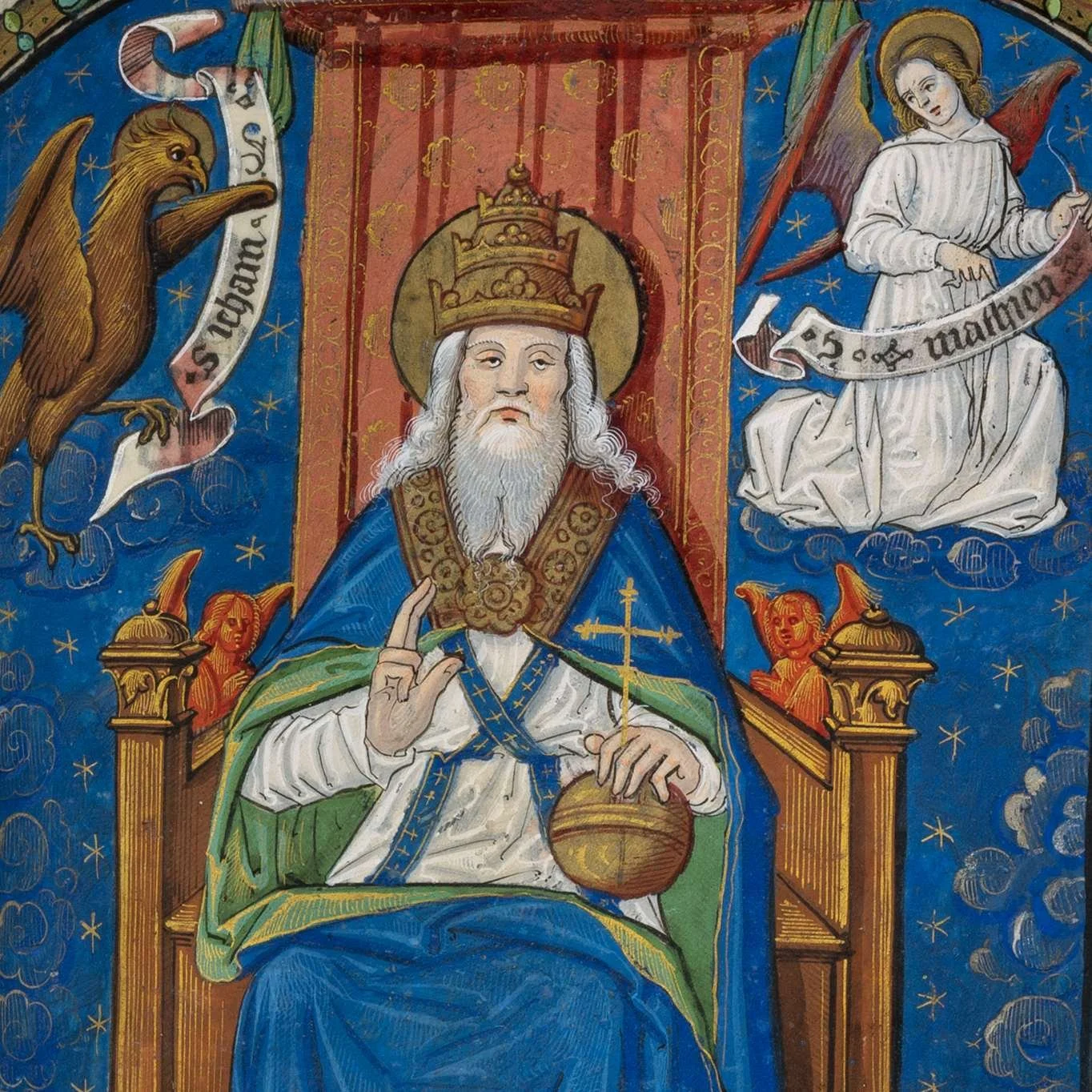
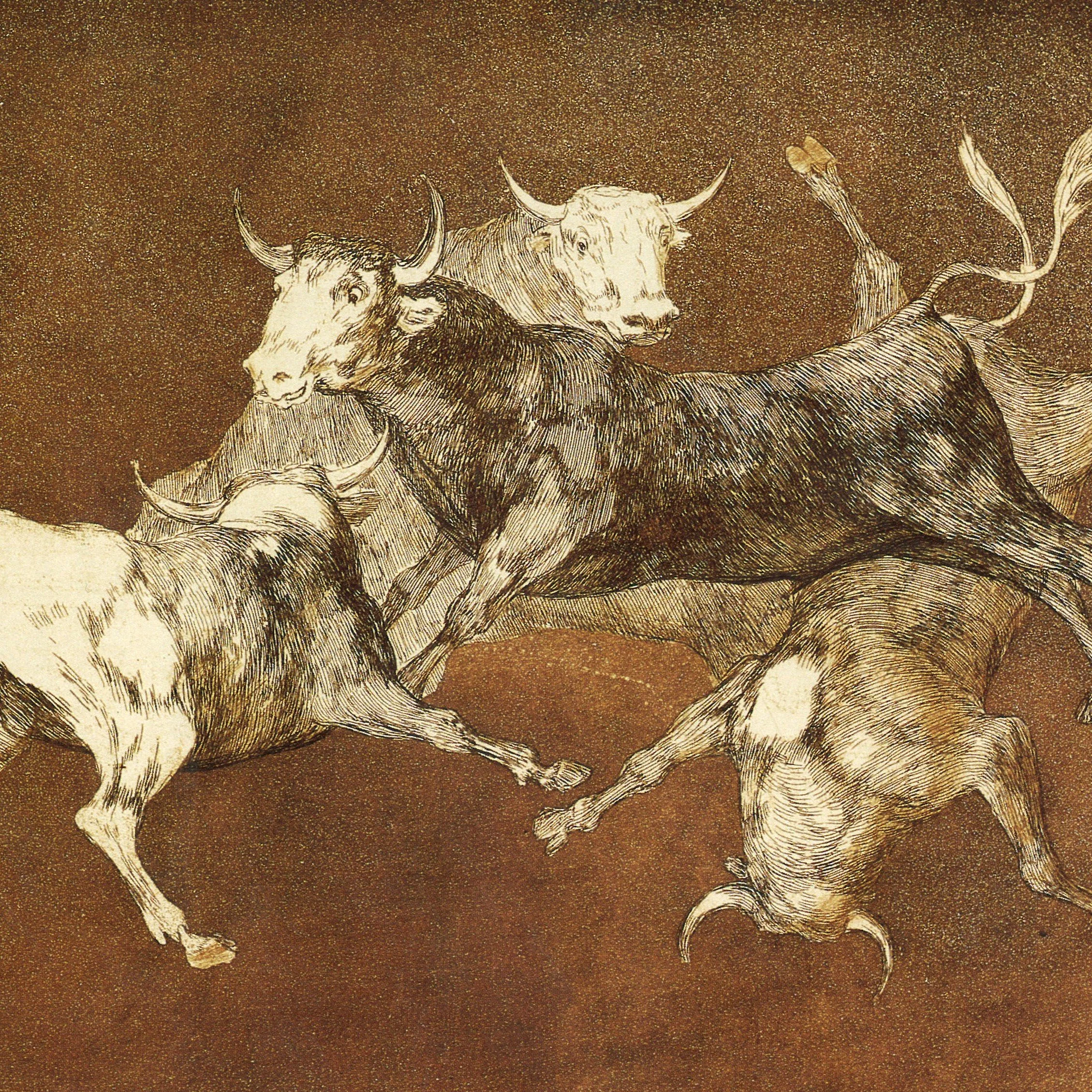
The Unique Copy of Prince Demidoff: One of five Luxury Copies on Velin, with 16 Proofs of Goya’s Disparates (Harris 266–269), Bound in Inlaid Morocco by Marius Michel
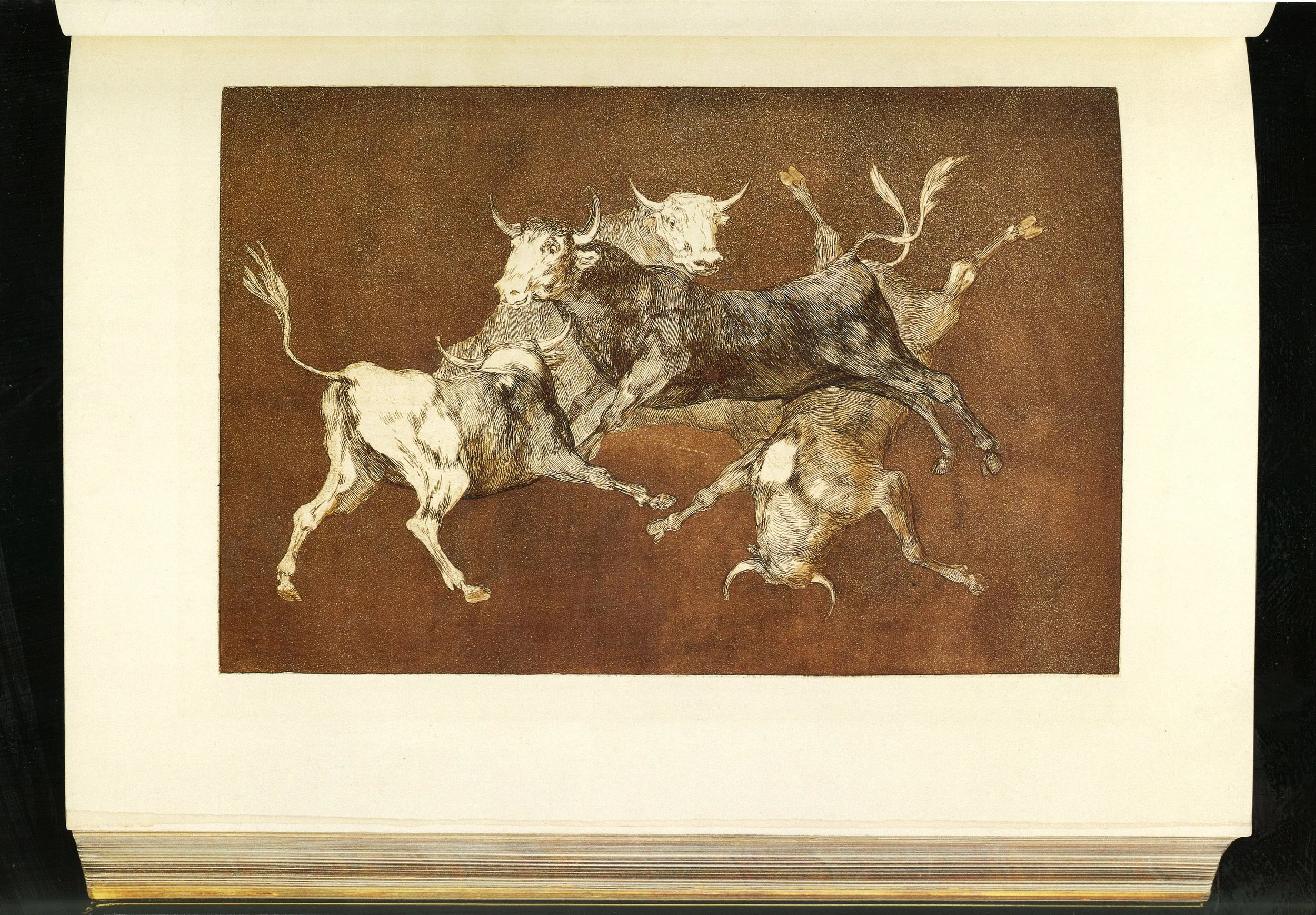
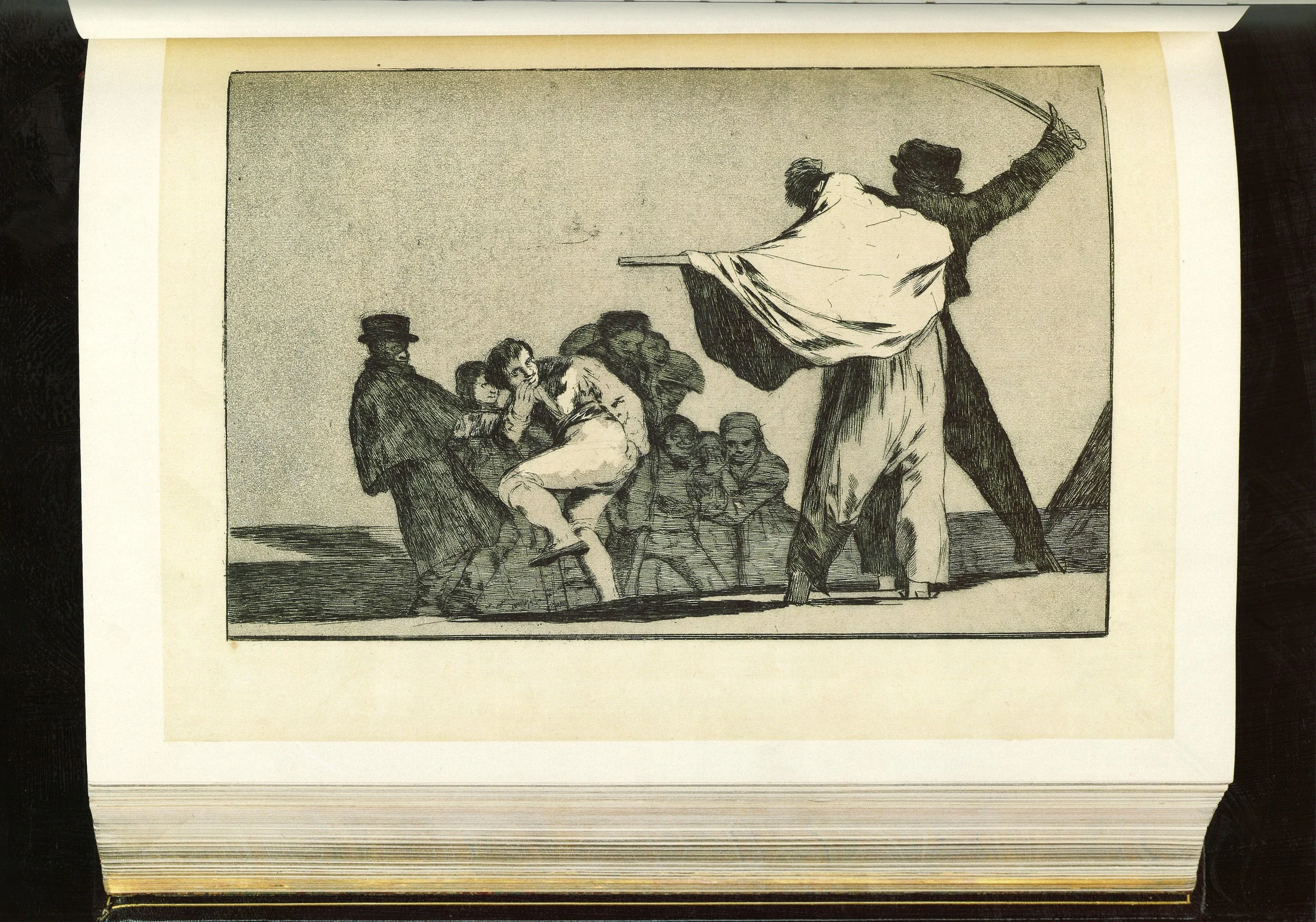
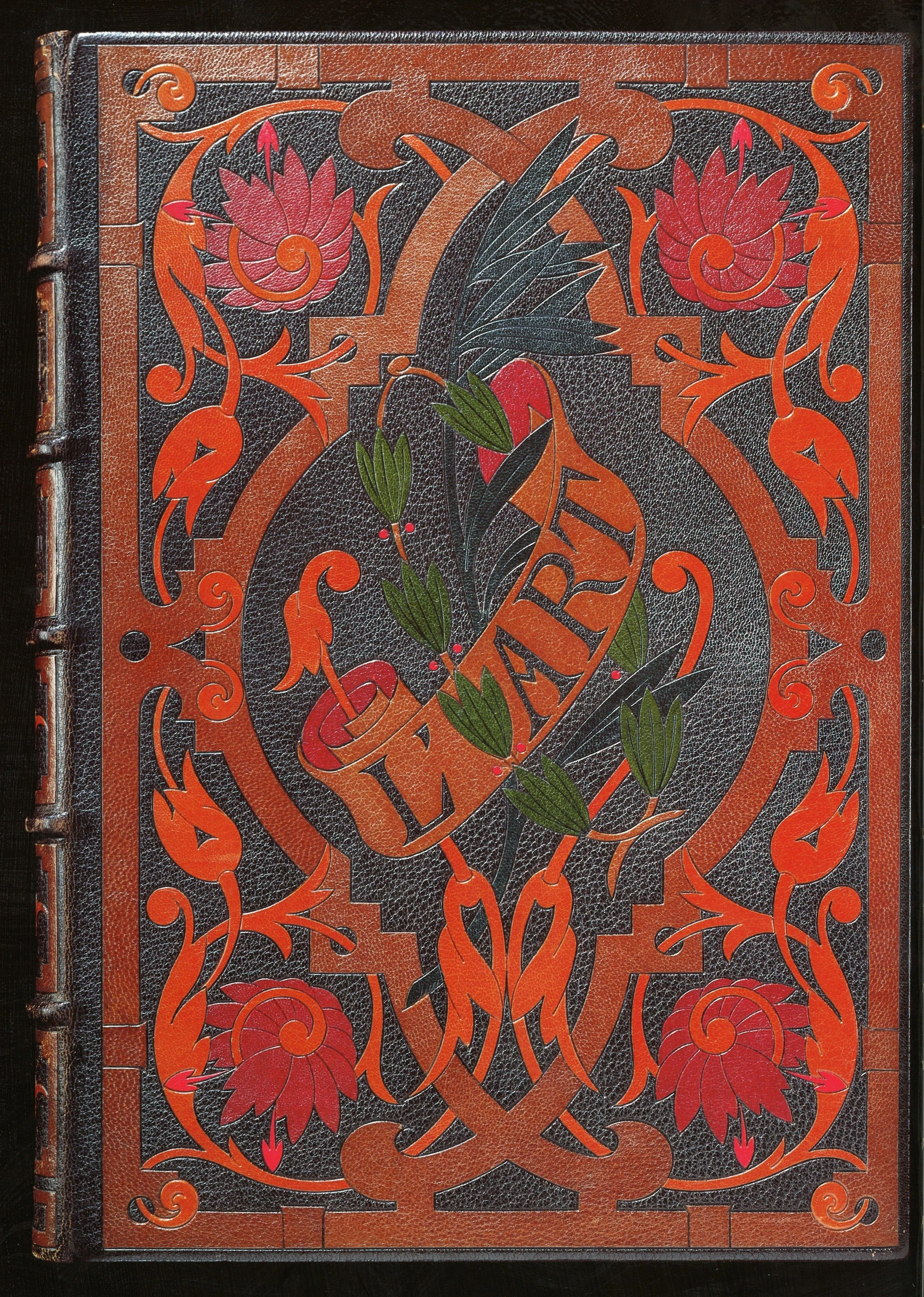
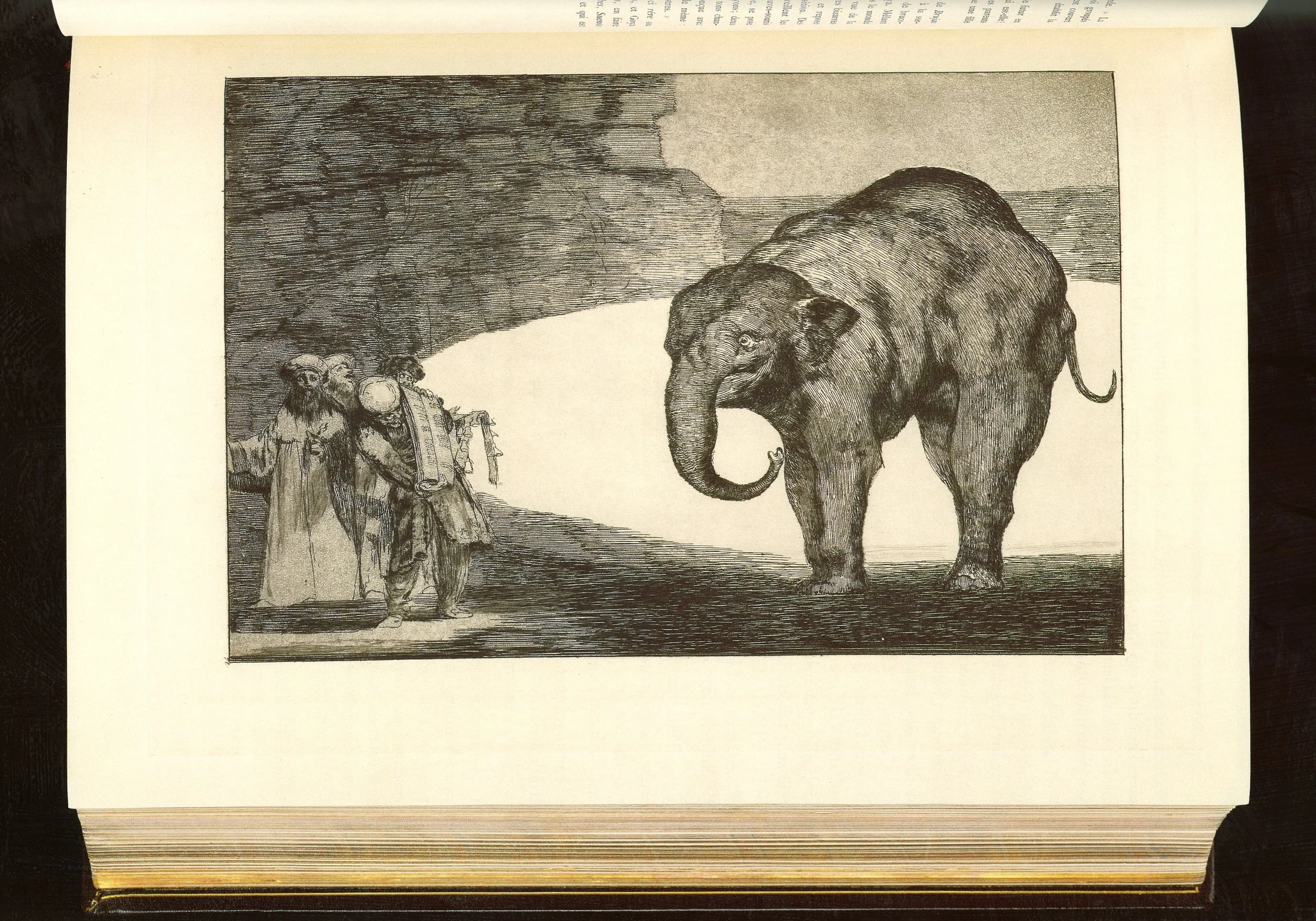
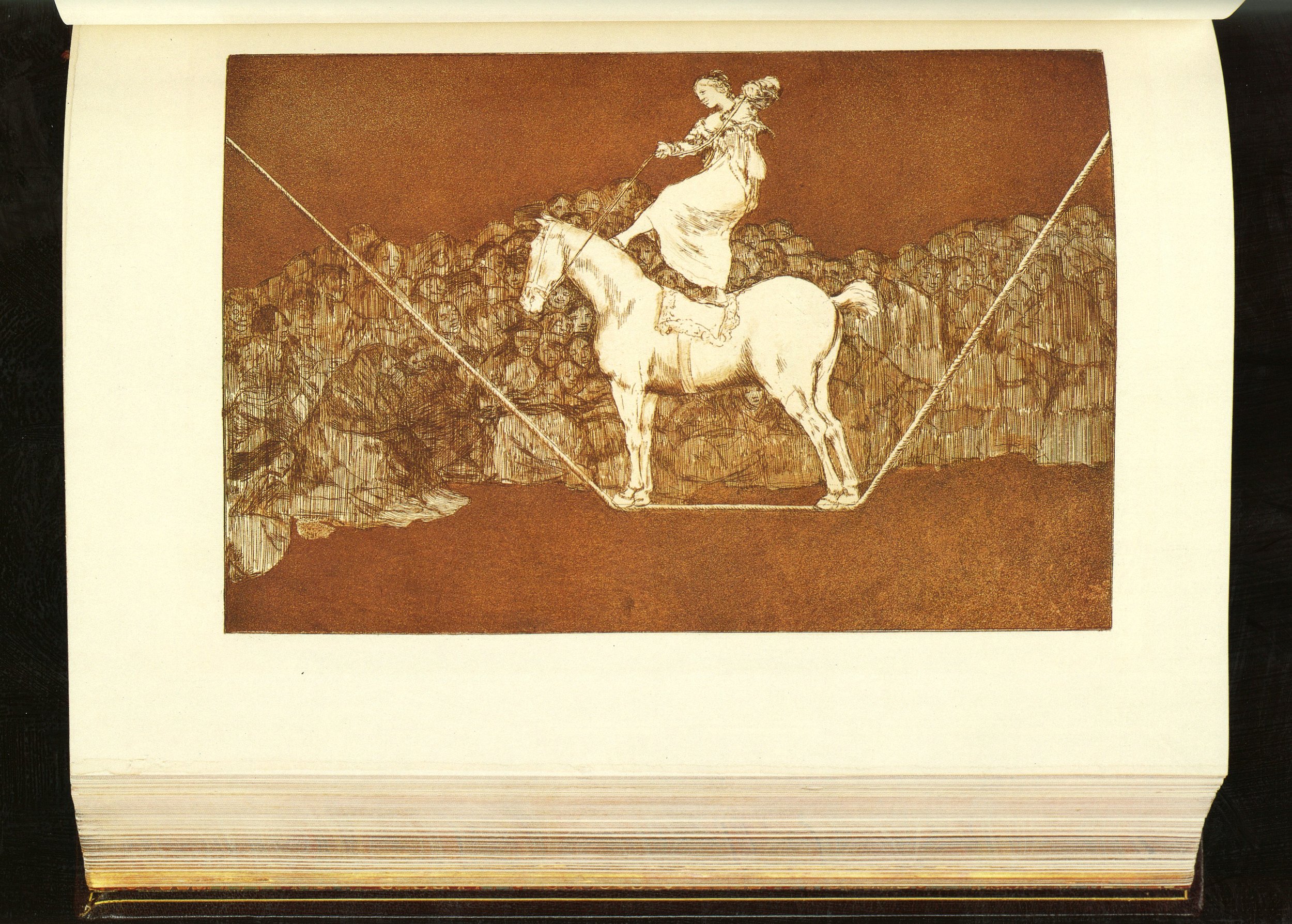
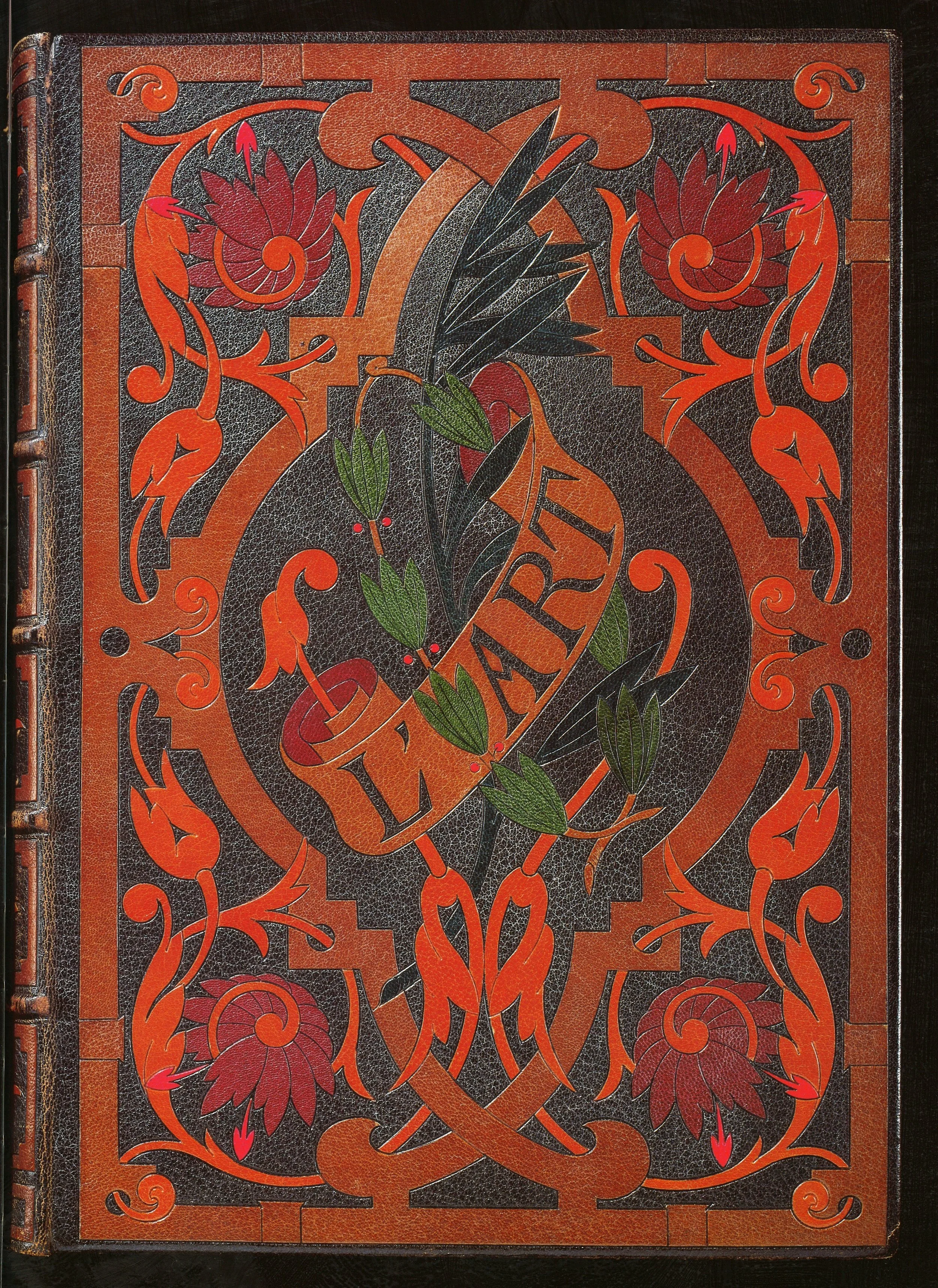
L’Art – One of only five copies of the most luxurious edition of the celebrated journal L’Art to contain four hitherto unpublished etchings by Goya, each present in four distinct states (the first three of these existing only in five copies each): before letters on parchment (vellum) printed in black, before letters on Japanese paper printed in charcoal grey, before letters on Whatman paper printed in reddish brown – a state and colour unknown to Harris(!) – as well as the final state printed in black. This copy, furthermore, was bound for Prince Demidoff by Marius Michel in two magnificent inlaid morocco bindings – one of the most creative achievements of this legendary binder.
L’Art. Revue Hebdomadaire Illustrée.
Volumes VIII and IX (= Volumes 1 and 2 of the third year).
Paris & London, A. Ballue, 1877.
Large folio (427 × 304 mm).
2 leaves, 297 pages, 1 errata leaf; 2 leaves, 324 pages.
Hundreds of original prints (see below), including four etchings from Goya’s series Proverbios (or Disparates):
Disparate Conocido
Disparate Puntual
Disparate de Bestia
Disparate de Tontos
Each of these four etchings appears in four different states, among them three proof states on vellum (calf skin), Japanese paper, and Whatman paper.
Binding
Contemporary dark brown morocco on five raised bands. Spine with blind-stamped title and ornamental floral inlays in the compartments. Front cover with large, multi-coloured inlay work within a Renaissance-style frame, featuring an extraordinary floral decoration evoking natural growth; the title L’Art is inlaid at the centre. Back cover with a more restrained, ornamentally accented frame and monochrome inlay. No gold tooling whatsoever – a remarkably avant-garde design. Endpapers and flyleaves covered in brocade with a magnificent floral pattern, framed by six gold fillets; marbled paper triplures; full gilt edges. Signed Marius Michel.
The Unique Significance
This is the unique Demidoff copy of the famous art magazine L’Art. The leading binder of the time Marius Michel, working on one of only five copies of the Édition grand luxe on the finest velin, created a mesmerising series of some twenty large-folio volumes for Prince Demidoff. Their leather inlay decoration is so progressive that these bindings are arguably Michel’s most important early work.
This fact alone would already define an exceptional copy. What elevates Volume IX to genius is the inclusion of four original Goya etchings never before printed or published – each in four different states.
These four plates were originally conceived as complementing the set of the Proverbios (or Disparates), but became separated from the main body of work between 1828 and 1848. (The full series of 18 etchings was not published until 1864 in an edition of 300 copies.) The plates later came into the possession of the Spanish painter Eugenio Lucas, and were printed here for the first time in the 1877 edition of L’Art.
Crucially, in this luxury edition – limited to just five numbered copies – all four Goya etchings appear in four distinct variants:
1. Proof before letters – black ink on vellum (calf skin)
2. Proof before letters – charcoal grey on antique Japanese paper
3. Proof before letters – reddish brown on Whatman paper (this state, in this colour, unknown to Harris)
4. Final lettered state – black ink on laid handmade paper
The fact that this deluxe edition was produced in a run of only five copies (ours No. 5) naturally implies that there can only be five copies each of proof prints 1–3 (apart from any proof sheets, which are not of interest here)! Taken together with the inlaid volumes by Marius Michel, which are found only in the Demidoff copy, the sixteen Goya etchings constitute a unique selling point for our copy. Thus, the criterion of uniqueness is fulfilled, although this becomes almost secondary in view of the artistic significance.
The Four Goya Etchings in Volume IX
Volume IX therefore contains, as illustrations for the article “Goya Aquafortiste” by Charles Yriarte, the following etchings from the “Disparates”:
a) Opposite p. 6: Disparate de Tontos (Al toro y al aire darles calle) with a different title in the print run (Harris 269 II for proofs; Harris 269 III for final, though Harris does not record the brown Whatman proof). In four states as described.
b) Opposite p. 40: Disparate de Bestia (Quien se pondrá el Cascabel al Gato?) – again with a different title in the print run (Harris 268 II and III, without mention of the Whatman proof). Four states, as mentioned.
c) Opposite p. 56: Disparate conocido (Dos a uno, meten la paja en el culo) – titled Que Guerrero in the final state (Harris 266 II and III, again without the brown Whatman proof). Four states, as mentioned. The Whatman proof here takes on an almost red-chalk character.
d) Opposite p. 82: Disparate puntual (Bailando en una cuerda floja) – titled Una Reina del Circo in the final state (Harris 267 II and III, without the Whatman proof). Four states, as mentioned.
It is worth noting that while Harris lists working proofs for all four etchings under his category I, he records at most one copy in each case using the already-applied aquatint technique. The three avant la lettre states in our copy therefore come as close as physically possible to Goya’s original (= first) state of the plates. The fact that all four etchings appear also on vellum seems to be unique in all of Goya’s work.
Such proofs are virtually unobtainable on the market. When they do appear, they come from broken-up copies of the deluxe edition. Our copy, protected by its magnificent bindings, may well be the last to have survived intact in original condition.
Other Illustrations (in brief)
Volumes VIII and IX contain hundreds of original etchings and woodcuts by E. Abot, Th. Chauvel, Fr. Chifflart, Ch. Courtry, L. Gaucherel, G. Graux, Ad. Lalauze, Le Rat, Milius, Monziès, Balaire, Bouton, Dumont, Froment, Léveillé, Méaulle, Puyplat, Smeaton, Tilly, Tourfaut, Yon, and others. Most of these also appear in four states, totalling nearly a hundred proofs. Among them, fine plates exist – for example, the etching by Milius after Watteau in Vol. VIII, p. 117 – but they are dwarfed by the Goya etchings.
Condition
Interior in mint condition. Bindings immaculate, apart from minimal rubbing on the edges and joints, unavoidable given the size and weight of the volumes.
Conclusion
These volumes, containing Goya’s original prints and bound in Marius Michel bindings, rank among the most significant works bequeathed to us by the 19th century in terms of rarity, artistic significance and bibliophilic achievement – the vellum prints are, incidentally, of unique beauty in our copy.
Provenance
Prince Demidoff. Cf. H. Beraldi, La Reliure du XIXe Siècle III, p. 109, no. 133 with heliogravure illustration of our binding, plate 133:
“Comme travail exceptionnel, il faut citer deux exemplaires du Journal L’Art, in-fol. L’un, relié sur la commande de l’administration du Journal, ne comprend que quatre ou cinq volumes. L’autre série, reliée pour le prince Demidoff, comprend dix-neuf volumes. Maroquin tête de nègre, carcasse du décor La Vallière, laurier vert foncé, banderole à revers rouge, flore ornementale rouge et orange.”
The volumes remained in the family’s possession until recently, when a French colleague offered the series – though without the Goyas.
Bibliography
Tomas Harris, Goya – Engravings and Lithographs, 2 vols., Oxford 1964. Vol. II, Catalogue raisonné, nos. 266–269.
E. Kornfeld, Francisco Goya. Sein Leben im Spiegel der Graphik, Bern, 1996, nos. 248, 1–4 (printed from the general edition), 250–252 (special edition of 100 copies – not the deluxe edition).
Vicaire I, 97–101.
If you would like to receive further information on this work, please contact us.